Free course
The Go course
Why here. Variables, slices, interfaces, goroutines, an HTTP API and tests, in short lessons with no signup. In one evening, you know whether you like Go before you buy a book.
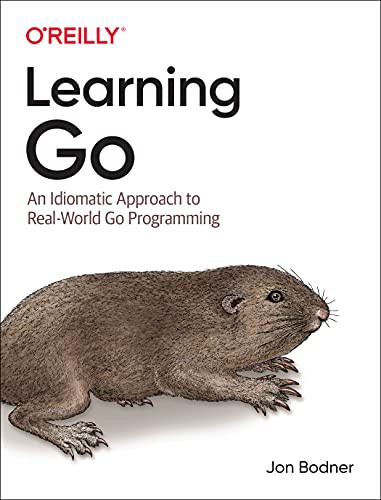
Only one of these books is essential: Learning Go. The others answer a specific need, and each step says when you have reached it. Every book has its full review in the library, with its score out of 10 and what has aged.
You have never written any Go.
Why here. Variables, slices, interfaces, goroutines, an HTTP API and tests, in short lessons with no signup. In one evening, you know whether you like Go before you buy a book.
You finished the course, or you come from another language.
Why here. The book I recommend to learn Go. It explains why the language is built this way, which keeps you from writing PHP or Java in Go syntax. It is a second-language book: it assumes you can already program.
What to skip. Nothing. The chapters on tooling and modules will age faster than the rest.
The catch. No running example: you remember rules rather than stories. It stops at Go 1.21, without the iterators of Go 1.23.
Practice with. Slices and maps, Methods and interfaces, Generics.
You are writing your first service or API in Go.
Why here. An API written in Go is still an API. This book teaches you to design it for the people who use it, from the business need to the OpenAPI document.
What to skip. Read the first three ideas (the need, the data), then pick naming, errors and security when you need them.
The catch. 536 pages, systematic to the point of exhaustion, and centered on REST and HTTP.
Practice with. HTTP and REST APIs, The REST API course.
Why here. The best design book I have read, in 196 pages. Its deep module, a simple interface in front of a lot of work, is what Go encourages with its small interfaces.
What to skip. Nothing: it is short.
The catch. The examples revolve around the same two or three cases, and the ideas are easier to understand than to apply.
Practice with. Methods and interfaces.
You have run Go in production for a few months and want to know what the runtime does with your memory and goroutines.
Why here. A good map of the engine: a slice weighs only 24 bytes and copying it does not copy its data, a channel is a lock with a queue, and the garbage collector has its own settings. Read it with a terminal open to check.
What to skip. Start with parts 1 and 2, then chapters 5 (garbage collector) and 10 (slices). Skim chapter 12 (maps), skip the assembly pages.
The catch. Written in French only, over 600 pages, and a few details describe Go before 1.24 and 1.25: the review lists the gaps.
Practice with. Slices and maps, Goroutines and channels.
Why here. The boundary between Go and the kernel: descriptors, signals, sockets, memory and profiling, with one good reflex, measure instead of guessing.
What to skip. Read it selectively: memory, sockets and profiling.
The catch. Uneven examples, some of which do the opposite of what they promise: reread the code before you copy it.
Practice with. Advanced concurrency, Tests and benchmarks.
A book on concurrency belongs here. I have not yet read one I recommend: until then, the Goroutines and channels and Advanced concurrency lessons of the course cover the basics.
Your service talks to other services, a message queue or a replicated database.
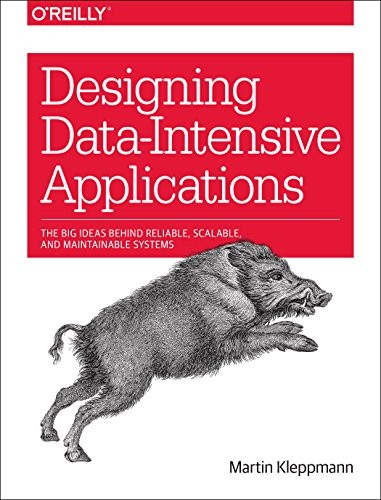
Why here. The best backend engineering book I have read: what happens under replication, partitioning and message queues, and why it breaks in production.
What to skip. Chapters 1 to 8 are the core for a web developer. Chapter 10 (Hadoop) reads like history.
The catch. Long and dense. My review covers the first edition, and a second one came out in early 2026: get that one.
Practice with. Advanced concurrency.
Why here. A Go monolith that becomes, step by step, an asynchronous system that still works, with a code repository to follow.
Before. Know CQRS and event sourcing already. Otherwise, start with the Exploring CQRS and Event Sourcing review. Read the review
What to skip. Skim chapter 3. Chapter 11 (AWS and Terraform) is another book.
The catch. Tooling from 2022, and missing safeguards: idempotency fits on one page.
Start from what you are building:
Learning Go, by Jon Bodner, after an introductory course if you have never written any Go. It assumes you can already program in another language.
No. Steps 1 and 2 follow each other, steps 3 and 4 depend on what you build. Each step says when it helps.
I only list books I have read in full and reviewed. The path grows as I read more: a famous Go book I have not read is not here, even if it is good.